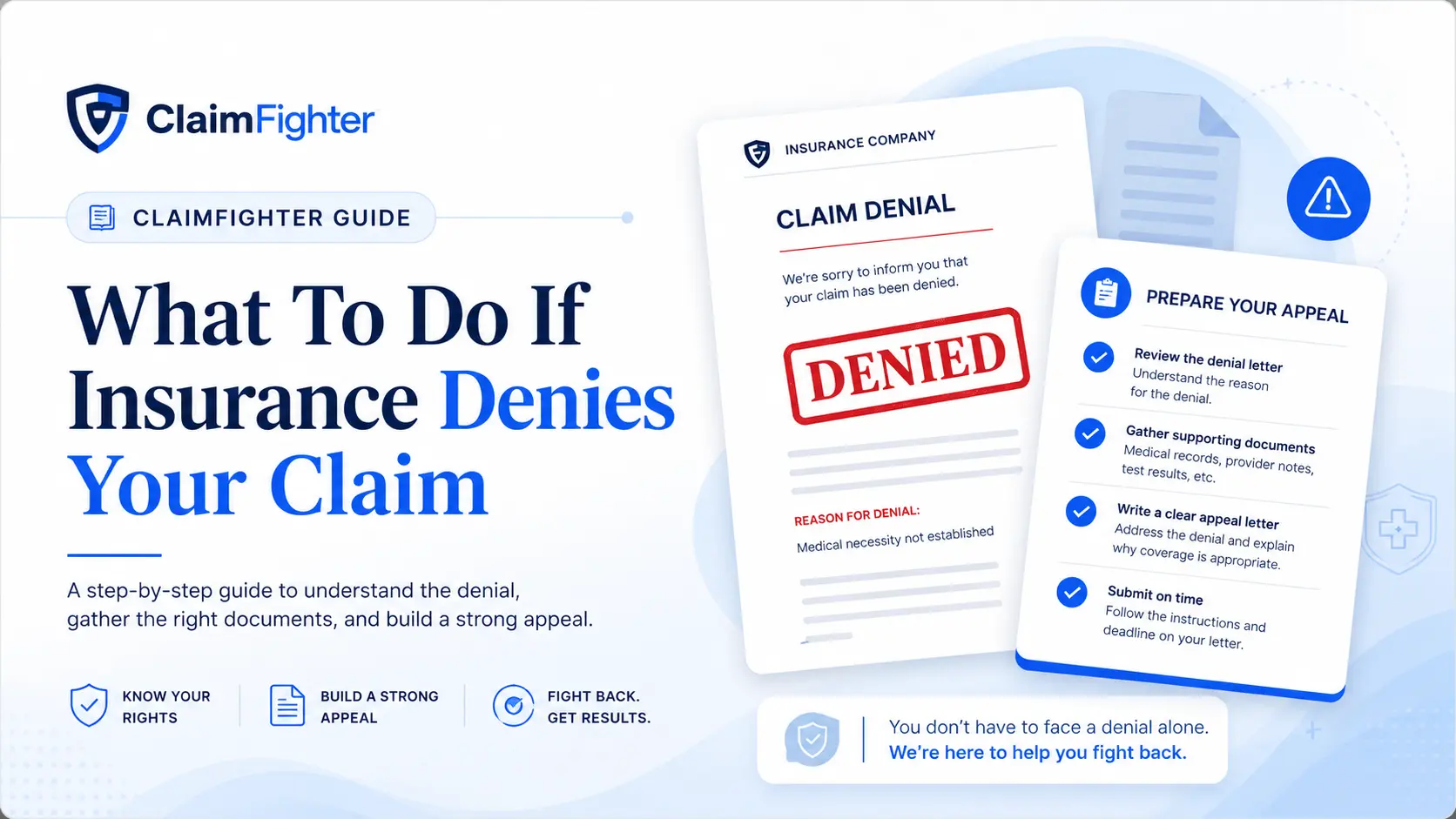
ClaimFighter Guide
Denied Claim Next Steps
Insurance Denials
What To Do If Insurance Denies Your Claim
An insurance denial can feel abrupt and confusing, especially when the letter uses plan language instead of plain English. The best first step is not to panic or start over from scratch. Slow down, identify what the insurer actually denied, and build your response around the reason they gave.
Short answer
If insurance denies your claim, read the denial reason, check the appeal deadline, gather supporting records, confirm key details, and write an appeal letter that directly responds to the insurer's stated reason.
Read the denial letter carefully
Start by reading the whole letter, even if the first page already says the claim was denied. Insurance denial letters often include the reason for the decision, the plan rule the insurer relied on, appeal instructions, appeal deadlines, and where to send the appeal. Those details matter because an appeal that responds to the wrong issue can miss the point.
Look for the patient name, member ID, claim number, service date, provider name, requested service, denial code, and any CPT or CDT code shown. Do not guess at codes or medical details if they are not visible. If a detail is unclear, mark it as something to verify before sending the appeal.
Identify the exact denial reason
Most appeals work best when they answer the reason the insurer actually gave. Common reasons include medical necessity, missing information, benefit limits, out-of-network care, prior authorization issues, coding problems, or services the plan says are not covered. Each reason calls for a slightly different response.
For example, a missing information denial may need records, invoices, or provider notes. A medical necessity denial may need a provider explanation, treatment history, symptoms, diagnosis information, or plan language. A prior authorization denial may need proof that the service was requested and why the provider believed it was needed.
Check the appeal deadline
Appeal windows can be short. Some letters mention a number of days from the notice date, while others list a specific deadline. If the letter has both a denial date and an appeal deadline, save both. If you are unsure which deadline applies, contact the insurer or check the plan documents.
Do not wait until every possible document is perfect if the deadline is close. A clear appeal with the denial letter, key claim details, and available records may be better than missing the deadline entirely. You can also ask the insurer what documentation they need for the specific denial reason.
Gather documents that match the issue
The documents you gather should match the denial. Useful records may include the denial letter, explanation of benefits, provider notes, treatment plan, prescription history, imaging order, surgery recommendation, dental x-rays, hospital records, bills, or plan language. Keep copies of everything you send.
If the denial says information was missing, focus on the missing item. If it says the service was not medically necessary, focus on why the provider recommended the care and how the records support that recommendation. Avoid adding unrelated documents that make the packet harder to review.
Write a focused appeal letter
A good appeal letter does not need legal language. It should identify the patient, insurer, member ID, claim number, denied service, denial reason, and requested outcome. Then it should explain why the claim should be reviewed again and point to the attached documents.
Keep the tone calm and direct. You can say that you are requesting reconsideration, that the provider recommended the care, and that supporting records are included. ClaimFighter can help turn the denial details into a clear appeal draft, but you should always review the draft before using it.
Need help turning your denial letter into an appeal draft?
Upload Your Denial LetterFAQs
What should I check first after insurance denies your claim?
Start with the denial reason, appeal deadline, member ID, claim number, insurer instructions, and any code or service description that appears in the letter.
Do I need to include medical records with every appeal?
Not every appeal needs the same records, but provider notes, treatment plans, bills, plan language, and the denial letter can help show why the claim should be reviewed again.
Can ClaimFighter guarantee my appeal will be approved?
No. ClaimFighter helps create an appeal draft for informational purposes only and does not guarantee claim approval.
What documents may support this type of appeal?
Common supporting documents include the denial letter, explanation of benefits, provider notes, medical records, bills, plan details, and any records tied to the denied service.
ClaimFighter helps generate appeal letter drafts for informational purposes only. It is not legal, medical, or insurance advice and does not guarantee claim approval.