ClaimFighter Guide
Appeal Documents Checklist
Appeal Documents
What Documents To Include in an Insurance Appeal
The documents you include in an insurance appeal should match the denial reason. A large packet is not always better. A clear packet with the denial letter, claim details, provider support, and relevant records can be easier for the reviewer to understand.
Short answer
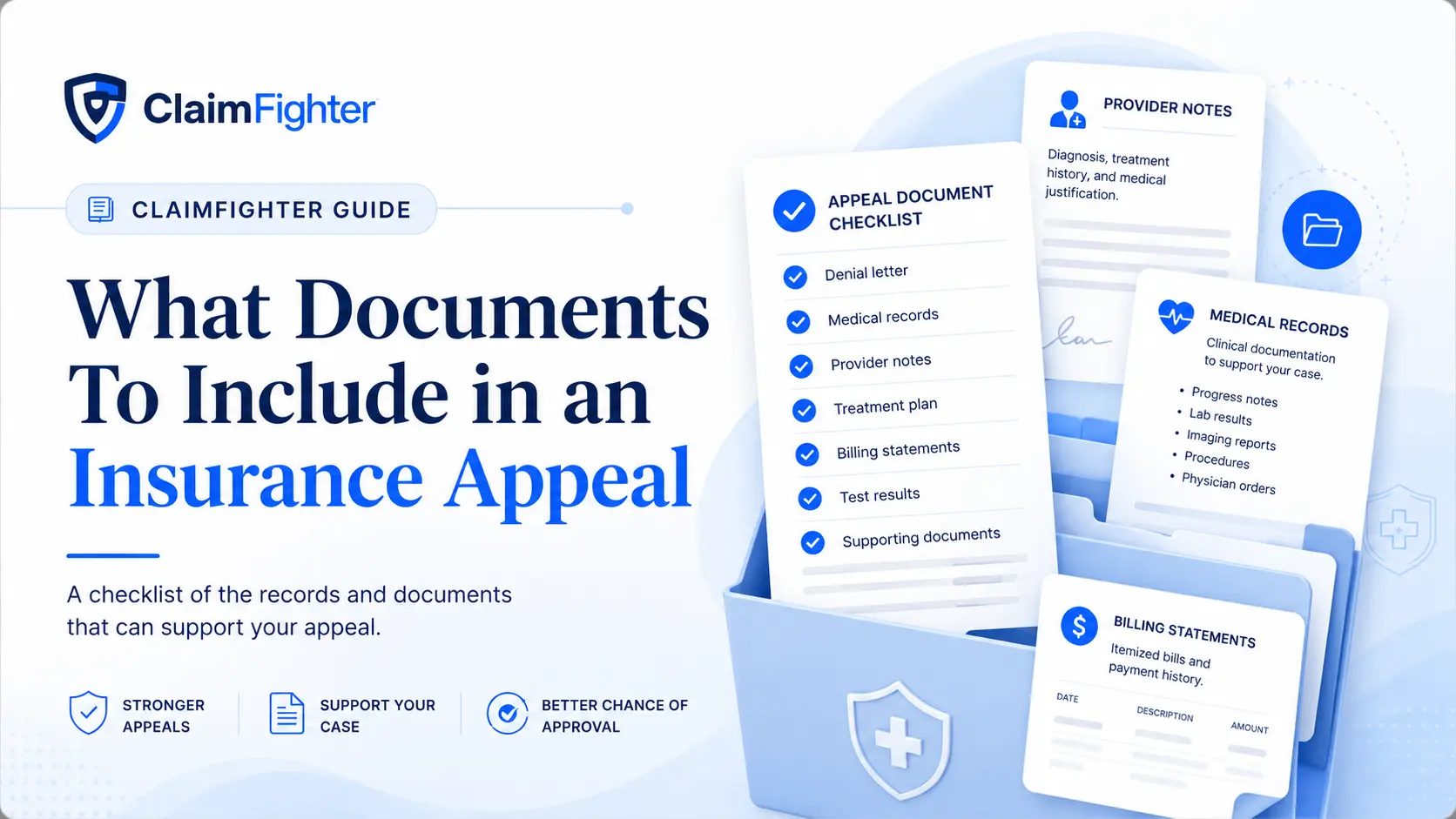
Common insurance appeal documents include the denial letter, explanation of benefits, provider notes, treatment plans, medical records, bills, plan details, and records specific to the denied care.
Always start with the denial letter
The denial letter explains what was denied and why. It may also include the appeal deadline, claim number, member ID, mailing address, fax number, portal instructions, denial code, or service code. Include a copy with the appeal packet.
Use the letter as your roadmap. If the denial says information was missing, include that information. If it says the care was not medically necessary, include records that explain why the provider recommended the care.
Include provider notes when relevant
Provider notes can help explain the medical or dental reason for the requested care. For therapy, notes may show progress, functional improvement, maintenance needs, or continued care recommendations. For surgery, notes may show symptoms, diagnosis, and prior conservative treatment.
For medication appeals, a prescriber note may explain medication history, prior treatments tried, side effects, or why alternatives may not be appropriate. For MRI appeals, the provider order and symptoms or diagnosis notes may matter.
Match documents to denial type
Dental appeals may use x-rays, periodontal charting, treatment plans, CDT codes, and dentist notes. Hospital stay appeals may use hospital notes, discharge summaries, monitoring records, and care team documentation.
Prior authorization appeals may use the authorization request, provider notes, clinical records, and plan criteria. General medical appeals may use bills, plan details, provider records, and documentation tied to the denied service.
Keep codes and dates accurate
If the denial letter shows a CPT code, CDT code, diagnosis code, denial code, claim number, member ID, provider name, or service date, include it exactly as shown. If it is not visible, do not invent it.
Accuracy is more important than making the letter look technical. Wrong codes or dates can make the appeal harder to review.
Organize the packet before sending
A simple packet might include the appeal letter first, then the denial letter, then supporting records in the order they are mentioned. Label attachments clearly if possible.
ClaimFighter can help generate an appeal draft and supporting document checklist based on the selected denial category. It does not send the appeal automatically or guarantee approval.
Need help turning your denial letter into an appeal draft?
Upload Your Denial LetterFAQs
What should I check first after preparing insurance appeal documents?
Start with the denial reason, appeal deadline, member ID, claim number, insurer instructions, and any code or service description that appears in the letter.
Do I need to include medical records with every appeal?
Not every appeal needs the same records, but provider notes, treatment plans, bills, plan language, and the denial letter can help show why the claim should be reviewed again.
Can ClaimFighter guarantee my appeal will be approved?
No. ClaimFighter helps create an appeal draft for informational purposes only and does not guarantee claim approval.
What documents may support this type of appeal?
Helpful documents depend on the denial, but common examples include denial letters, provider notes, treatment plans, plan details, medical records, bills, x-rays, prescription history, and authorization records.
ClaimFighter helps generate appeal letter drafts for informational purposes only. It is not legal, medical, or insurance advice and does not guarantee claim approval.