ClaimFighter Guide
Mental Health Appeal
Mental Health Denials
Mental Health Insurance Denial Appeal: What To Include
Mental health denials can involve therapy sessions, inpatient or outpatient treatment, behavioral health programs, medication support, or coverage limits. The appeal should focus on continuity of care, provider recommendations, treatment plan details, and the reason the insurer gave for the denial.
Short answer
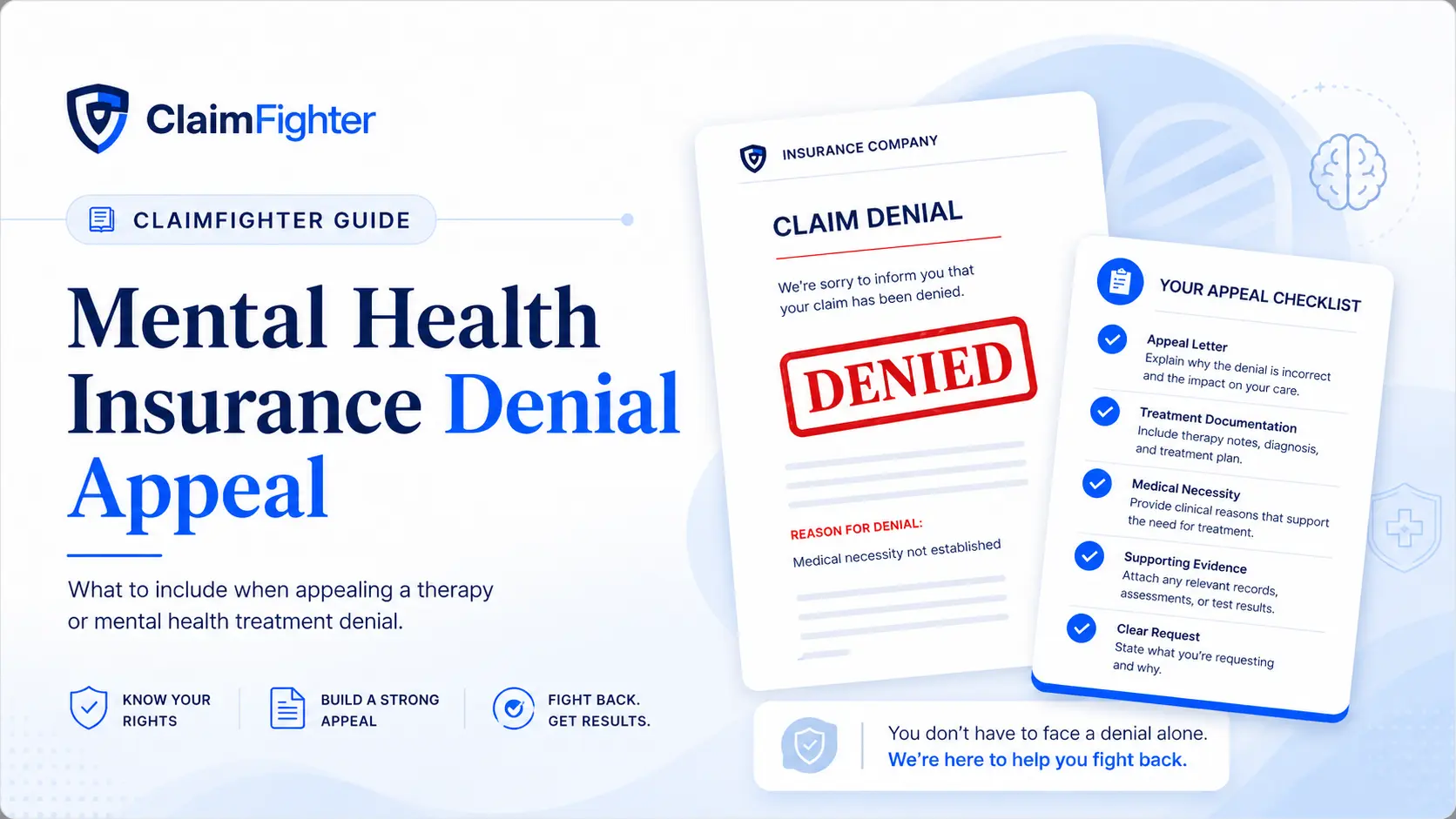
A mental health insurance denial appeal should include the denial reason, provider or therapist notes, treatment plan, session authorization details when available, and a clear request for reconsideration.
Identify what was denied
Start by naming the denied service. It may be therapy sessions, an intensive outpatient program, inpatient behavioral health treatment, psychiatric care, or another mental health service. Include the provider name, member ID, claim number, and denial date when available.
If the letter lists session limits, authorization details, CPT codes, or plan criteria, copy those details exactly. Do not add diagnosis codes or clinical facts unless they are visible or confirmed.
Respond to the denial reason
Mental health denials may cite medical necessity, benefit limits, prior authorization, missing information, or coverage rules. The appeal should directly answer the stated reason rather than making a broad complaint about the denial.
If the denial is based on medical necessity, provider notes and treatment plans can explain why care is clinically appropriate. If the issue is a session limit or authorization problem, the appeal can point to the provider's recommendation and continuity of care concerns.
Include continuity of care
Continuity of care can matter when a patient is already receiving treatment. A provider may be able to explain why interruption could disrupt progress, worsen symptoms, or make care less effective. The appeal should not exaggerate; it should rely on the provider's notes and treatment plan.
A clear appeal may ask the insurer to review the treating provider's clinical judgment, diagnosis documentation, treatment records, and ongoing care needs.
Prepare a useful packet
Helpful documents may include the denial letter, provider or therapist note, treatment plan, diagnosis documentation, session authorization details, and records showing ongoing care needs. Keep copies of everything submitted.
The final appeal should be reviewed for accuracy and privacy. ClaimFighter can generate an editable draft, but it is not legal, medical, or insurance advice.
Need help turning your denial letter into an appeal draft?
Upload Your Denial LetterFAQs
What should I check first after appealing a mental health insurance denial?
Start with the denial reason, appeal deadline, member ID, claim number, insurer instructions, and any code or service description that appears in the letter.
Do I need to include medical records with every appeal?
Not every appeal needs the same records, but provider notes, treatment plans, bills, plan language, and the denial letter can help show why the claim should be reviewed again.
Can ClaimFighter guarantee my appeal will be approved?
No. ClaimFighter helps create an appeal draft for informational purposes only and does not guarantee claim approval.
What documents may support this type of appeal?
Helpful documents may include the denial letter, provider or therapist note, treatment plan, diagnosis documentation, session authorization details, and behavioral health records.
ClaimFighter helps generate appeal letter drafts for informational purposes only. It is not legal, medical, or insurance advice and does not guarantee claim approval.