ClaimFighter Guide
Prior Authorization Denial
Prior Authorization
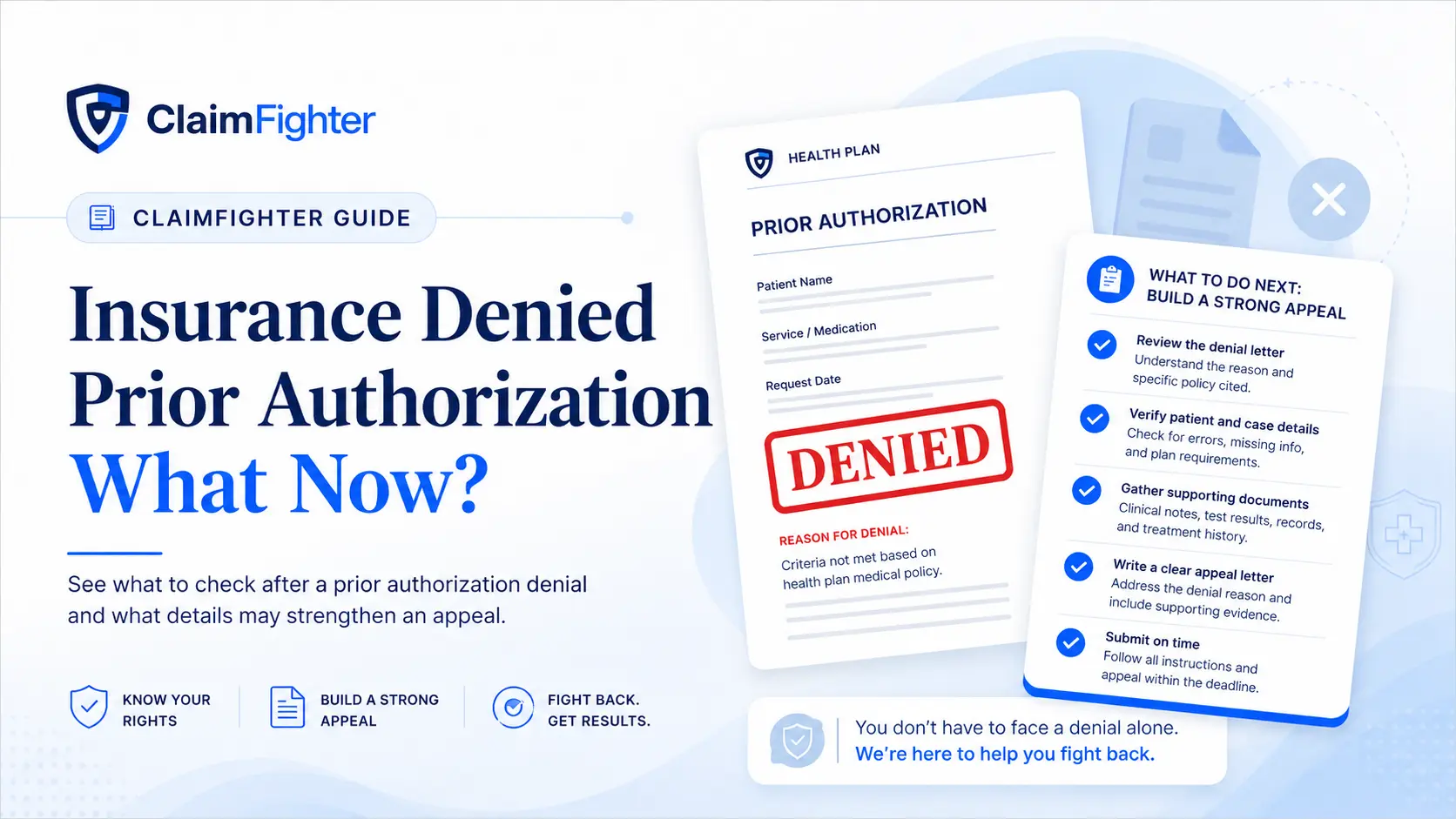
Insurance Denied Prior Authorization: What Now?
A prior authorization denial happens before or around the time a service is requested. The insurer may say the service does not meet plan criteria, information was missing, the provider did not submit enough documentation, or the service is not covered as requested.
Short answer
After a prior authorization denial, confirm what service was requested, why it was denied, what criteria were used, what records were missing, and whether your provider can submit supporting clinical notes.
Confirm what was requested
Start by identifying the requested service, medication, test, procedure, or treatment. Prior authorization letters may include a request number, authorization number, service code, provider name, date, or plan rule. Keep these details together.
If the letter is unclear, contact the provider's office or the insurer to confirm what request was denied. An appeal is stronger when it responds to the actual request instead of a general description.
Understand the denial reason
Prior authorization denials often involve medical necessity, missing documentation, step therapy, plan exclusions, out-of-network issues, or criteria that the insurer says were not met. The denial reason should shape your response.
If the insurer says the request lacked records, ask what records they need. If the insurer says criteria were not met, ask your provider whether the records show why the service is appropriate or whether additional information can be submitted.
Gather provider support
Because prior authorization is usually tied to a provider request, provider documentation can matter. This may include clinical notes, treatment plan, diagnosis information, prior treatments tried, medication history, symptoms, or a letter explaining why the requested service is needed.
The provider may also be able to request a peer-to-peer review or resubmit the authorization with additional records. That is separate from a patient appeal, but both may use similar documentation.
Write a focused appeal draft
The appeal letter should state that the requested service was submitted for prior authorization and denied. Include the denial reason, authorization number if visible, member ID, provider name, and service requested. Then ask the insurer to reconsider based on the supporting records.
Avoid claiming that approval is guaranteed or that the insurer must approve the request. Instead, ask for a review of the specific denial decision and explain why the provider recommended the service.
Track deadlines and next steps
Prior authorization denials may have urgent timelines, especially when care is time-sensitive. Check whether the denial letter mentions standard appeal, expedited appeal, or urgent review options. If the situation is urgent, contact the insurer or provider promptly.
ClaimFighter can help organize the denial details into an appeal draft, but it does not submit the appeal automatically or provide legal, medical, or insurance advice.
Need help turning your denial letter into an appeal draft?
Upload Your Denial LetterFAQs
What should I check first after insurance denies prior authorization?
Start with the denial reason, appeal deadline, member ID, claim number, insurer instructions, and any code or service description that appears in the letter.
Do I need to include medical records with every appeal?
Not every appeal needs the same records, but provider notes, treatment plans, bills, plan language, and the denial letter can help show why the claim should be reviewed again.
Can ClaimFighter guarantee my appeal will be approved?
No. ClaimFighter helps create an appeal draft for informational purposes only and does not guarantee claim approval.
What documents may support this type of appeal?
Useful documents may include the denial letter, prior authorization request, provider notes, diagnosis details, treatment plan, prior treatments tried, and records tied to the requested service.
ClaimFighter helps generate appeal letter drafts for informational purposes only. It is not legal, medical, or insurance advice and does not guarantee claim approval.