ClaimFighter Guide
MRI Denial Guide
MRI Denials
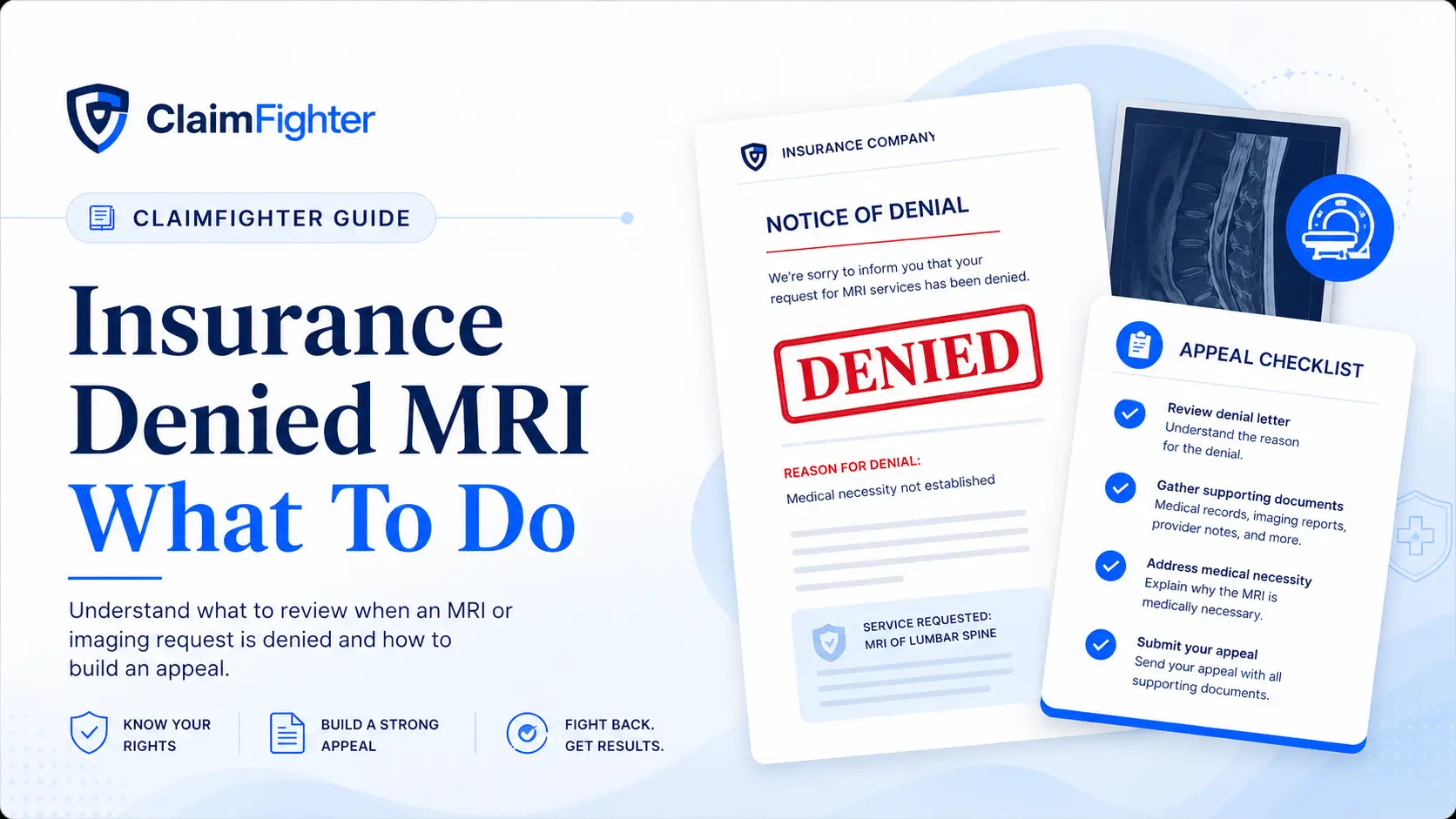
Insurance Denied MRI: What To Do
An MRI denial usually means the insurer decided the imaging request did not meet its criteria based on the information reviewed. The appeal should explain why the provider ordered the MRI and how the imaging may help evaluate, diagnose, monitor, or guide treatment.
Short answer
If insurance denies an MRI, check the denial reason, CPT code if visible, provider order, symptoms, diagnosis notes, prior treatment, and why the MRI may guide treatment decisions.
Confirm what imaging was denied
The letter may refer to an MRI, CT, ultrasound, x-ray, or other imaging study. It may also include a CPT code, body area, facility name, authorization number, or provider order. Copy these details exactly if they are visible.
If the letter only says imaging was denied without naming the study, ask the provider or insurer to confirm the requested test. The appeal should identify the specific imaging request, not just say that care was denied.
Understand the insurer's reason
MRI denials often involve medical necessity, lack of conservative treatment, missing documentation, criteria not met, or prior authorization issues. Some denials say the records did not show symptoms or prior care that justify imaging.
The appeal should answer that issue. If symptoms were not documented, provider notes may help. If conservative treatment was tried, records may show dates, treatments, and results. If the denial cites criteria, the provider may be able to explain how the request relates to those criteria.
Gather provider documentation
Useful documents may include the imaging order, provider note, diagnosis information, symptoms, exam findings, prior treatment, medication history, therapy notes, or records showing why imaging may change the treatment plan.
The appeal should not invent symptoms or diagnoses. It should use what is in the denial letter, provider records, or information the user confirms. If a diagnosis code is not visible, do not add one just to make the letter look stronger.
Explain why imaging matters
A strong MRI appeal often explains how the requested imaging may help evaluate, diagnose, monitor, or guide treatment decisions. It can also explain why the provider believes the imaging is appropriate based on symptoms, condition, or prior care.
The letter can ask the insurer to reconsider after reviewing the provider's order and supporting records. It should remain calm, direct, and tied to the denial reason.
Create a clear appeal packet
Include the denial letter, provider order, provider notes, symptoms or diagnosis records, CPT code if visible, prior treatment records, and any instructions from the insurer. Keep a copy of what you submit.
ClaimFighter can help turn an MRI denial letter into an editable appeal draft. It does not provide medical advice or guarantee approval.
Need help turning your denial letter into an appeal draft?
Upload Your Denial LetterFAQs
What should I check first after insurance denies an MRI?
Start with the denial reason, appeal deadline, member ID, claim number, insurer instructions, and any code or service description that appears in the letter.
Do I need to include medical records with every appeal?
Not every appeal needs the same records, but provider notes, treatment plans, bills, plan language, and the denial letter can help show why the claim should be reviewed again.
Can ClaimFighter guarantee my appeal will be approved?
No. ClaimFighter helps create an appeal draft for informational purposes only and does not guarantee claim approval.
What documents may support this type of appeal?
Helpful documents may include the denial letter, imaging order, provider notes, symptoms or diagnosis records, prior treatment history, and CPT code if visible.
ClaimFighter helps generate appeal letter drafts for informational purposes only. It is not legal, medical, or insurance advice and does not guarantee claim approval.