ClaimFighter Guide
Medication Denial
Medication Denials
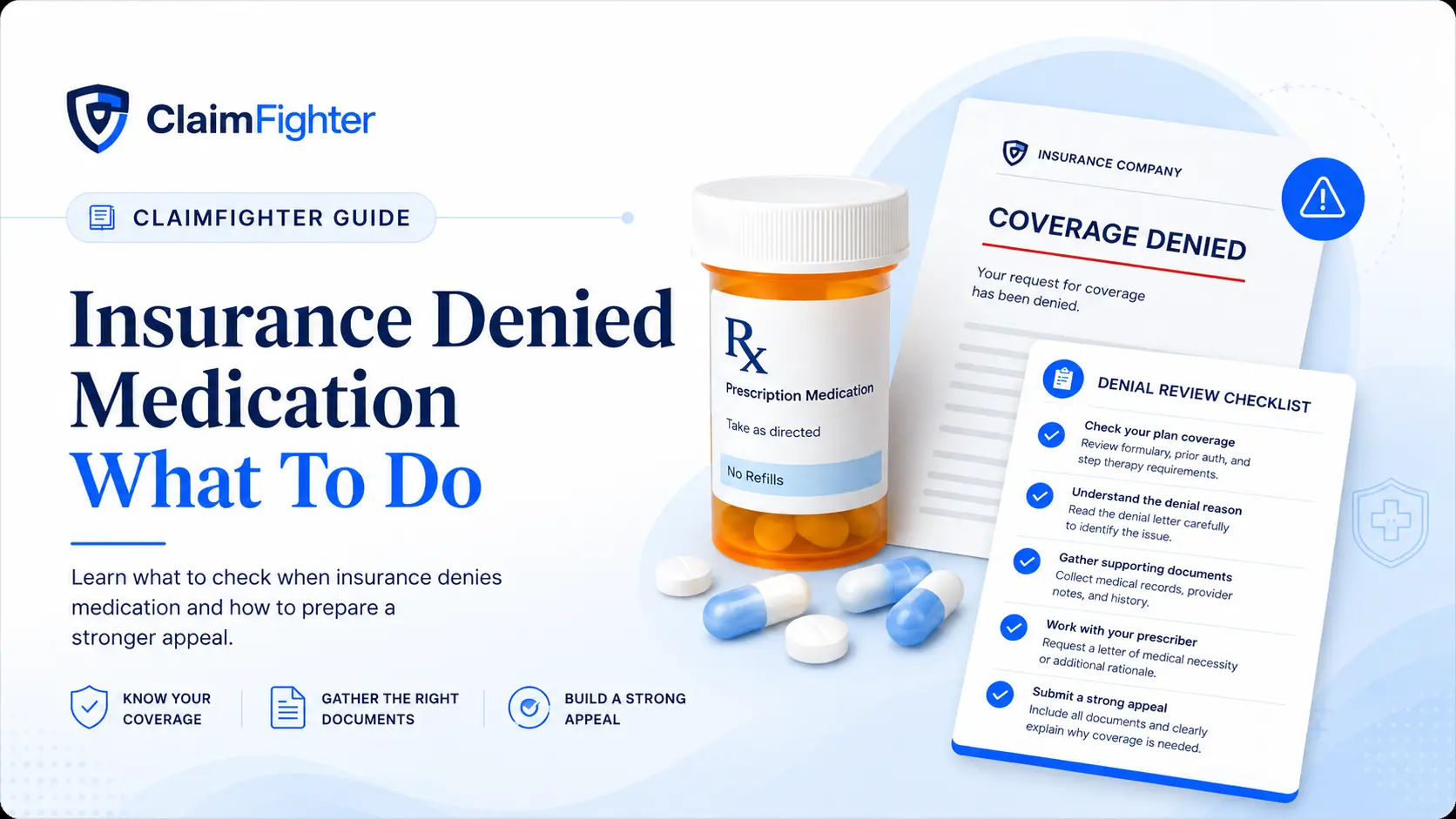
Insurance Denied Medication: What To Do
A medication denial can be especially stressful because it may interrupt treatment that a prescriber already recommended. Medication denials often involve formulary rules, prior authorization, step therapy, quantity limits, missing information, or plan exclusions.
Short answer
If insurance denies medication, check the denial reason, formulary language, prior authorization status, medication history, prior treatments tried, and whether the prescriber can provide a supporting note.
Read the medication denial reason
The denial letter may say the drug is not on the formulary, needs prior authorization, requires step therapy, exceeds a quantity limit, or is not covered for the diagnosis. Each reason needs a different response.
Write down the medication name exactly as shown. If the letter lists dosage, quantity, pharmacy claim details, denial code, or authorization number, keep those details. Do not add diagnosis codes or medication history unless they are visible or confirmed.
Gather medication history
Medication appeals often benefit from records showing prior medications tried, side effects, lack of response, allergies, contraindications, or why alternatives may not be appropriate. The prescriber is usually the best source for this information.
A short prescriber note can explain the diagnosis, treatment history, and reason for the requested medication. If the plan requires step therapy, the note can identify whether step therapy has already been tried or why it may not fit the patient's situation.
Prepare the appeal letter
The letter should identify the patient, insurer, member ID, medication, denial reason, prescriber, and any claim or authorization number. Then it should ask for reconsideration based on the prescriber's recommendation and supporting medication history.
Do not promise that the appeal will be approved. Keep the request specific: ask the insurer to review the denial again and consider the attached records, prescriber note, and plan criteria.
Keep the packet organized
Include the denial letter, prescription details, prescriber note, medication history, prior authorization documents, and plan or formulary details when available. If any detail is missing, note it as something to request rather than inventing it.
ClaimFighter can help draft a medication appeal letter from your denial information, but you should confirm all medication details before sending anything.
Need help turning your denial letter into an appeal draft?
Upload Your Denial LetterFAQs
What should I check first after insurance denies medication?
Start with the denial reason, appeal deadline, member ID, claim number, insurer instructions, and any code or service description that appears in the letter.
Do I need to include medical records with every appeal?
Not every appeal needs the same records, but provider notes, treatment plans, bills, plan language, and the denial letter can help show why the claim should be reviewed again.
Can ClaimFighter guarantee my appeal will be approved?
No. ClaimFighter helps create an appeal draft for informational purposes only and does not guarantee claim approval.
What documents may support this type of appeal?
Helpful documents may include the denial letter, prescription details, prescriber note, medication history, prior treatments tried, formulary details, and prior authorization records.
ClaimFighter helps generate appeal letter drafts for informational purposes only. It is not legal, medical, or insurance advice and does not guarantee claim approval.