ClaimFighter Guide
Medical Necessity Denial
Medical Necessity
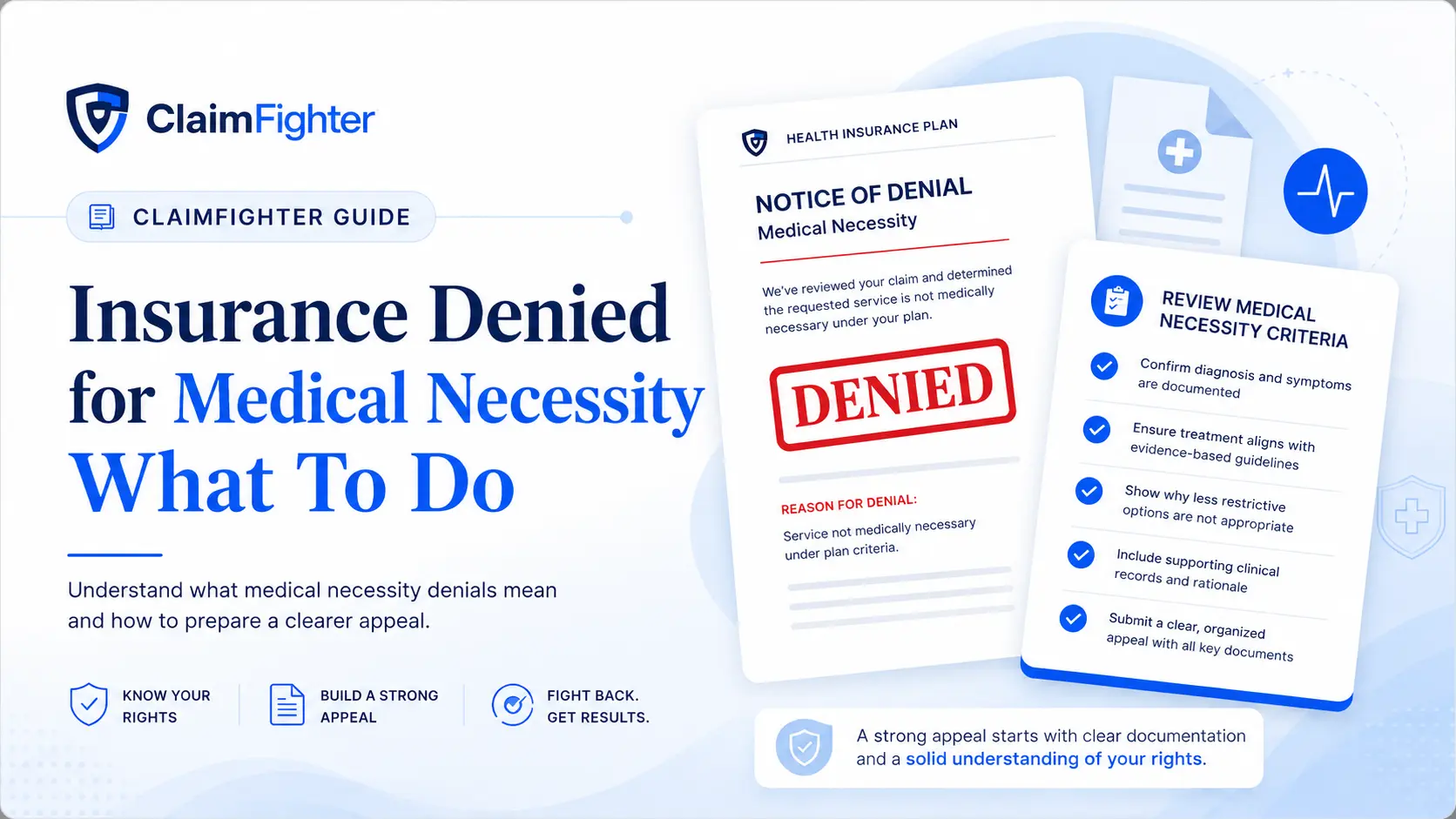
Insurance Denied for Medical Necessity: What To Do
A medical necessity denial means the insurer decided the records they reviewed did not show that the requested care met the plan's standard for coverage. That does not always mean the care was unimportant. It means the appeal should focus on why the provider recommended the care and what records support that recommendation.
Short answer
If insurance denies care for medical necessity, gather provider notes, treatment history, diagnosis details, symptoms, plan criteria, and a letter explaining why the requested service should be reviewed again.
What medical necessity means
Medical necessity is a plan standard insurers use to decide whether a service should be covered. The exact definition can vary by plan. A denial may say the treatment is not necessary, not appropriate, experimental, too frequent, or unsupported by the records received.
The appeal should not simply say the patient needs the care. It should connect the provider's recommendation to the patient's condition, symptoms, diagnosis, prior treatment, and relevant records. The clearer that connection is, the easier it is for the reviewer to understand the request.
Review what the insurer considered
Read the denial letter to see whether the insurer reviewed medical records, provider notes, clinical criteria, imaging results, treatment plans, or prior authorization information. Sometimes denials happen because the insurer did not receive the full record.
If the letter says records were missing or incomplete, your appeal can include the missing documents. If the letter cites a medical policy, ask the provider which records show that the service meets or should be reconsidered under the policy.
Ask the provider for support
Provider support is often important in medical necessity appeals. A provider note can explain the diagnosis, symptoms, prior treatments, risk of delaying care, and why the requested service may guide treatment or improve the patient's condition.
The provider does not need to use dramatic wording. A practical explanation tied to the medical record can be more useful than broad statements. If the requested service is an MRI, surgery, therapy, medication, or hospital stay, the supporting note should match that service.
Write the appeal around the denial reason
A medical necessity appeal should identify the service, quote or summarize the denial reason, and explain why reconsideration is requested. Include patient and claim details when available. If a CPT or CDT code is visible, include it exactly as shown.
Then point to the supporting records. You might mention provider notes, diagnosis details, failed conservative treatments, medication history, therapy progress, imaging orders, hospital records, or dental x-rays depending on the denial type.
Avoid making unsupported claims
Do not invent medical facts, diagnosis codes, or procedure codes. If something is not visible in the denial letter or confirmed by the user or provider, leave it out or describe it as something to gather if available.
ClaimFighter can help build a clearer draft, but the final appeal should be reviewed for accuracy. It is an informational tool, not a doctor, law firm, insurer, or medical provider.
Need help turning your denial letter into an appeal draft?
Upload Your Denial LetterFAQs
What should I check first after insurance denies care for medical necessity?
Start with the denial reason, appeal deadline, member ID, claim number, insurer instructions, and any code or service description that appears in the letter.
Do I need to include medical records with every appeal?
Not every appeal needs the same records, but provider notes, treatment plans, bills, plan language, and the denial letter can help show why the claim should be reviewed again.
Can ClaimFighter guarantee my appeal will be approved?
No. ClaimFighter helps create an appeal draft for informational purposes only and does not guarantee claim approval.
What documents may support this type of appeal?
Helpful records may include provider notes, treatment history, diagnosis information, imaging orders, therapy records, hospital records, medication history, and plan criteria.
ClaimFighter helps generate appeal letter drafts for informational purposes only. It is not legal, medical, or insurance advice and does not guarantee claim approval.