ClaimFighter Guide
Denial Letter Example
Denial Letters
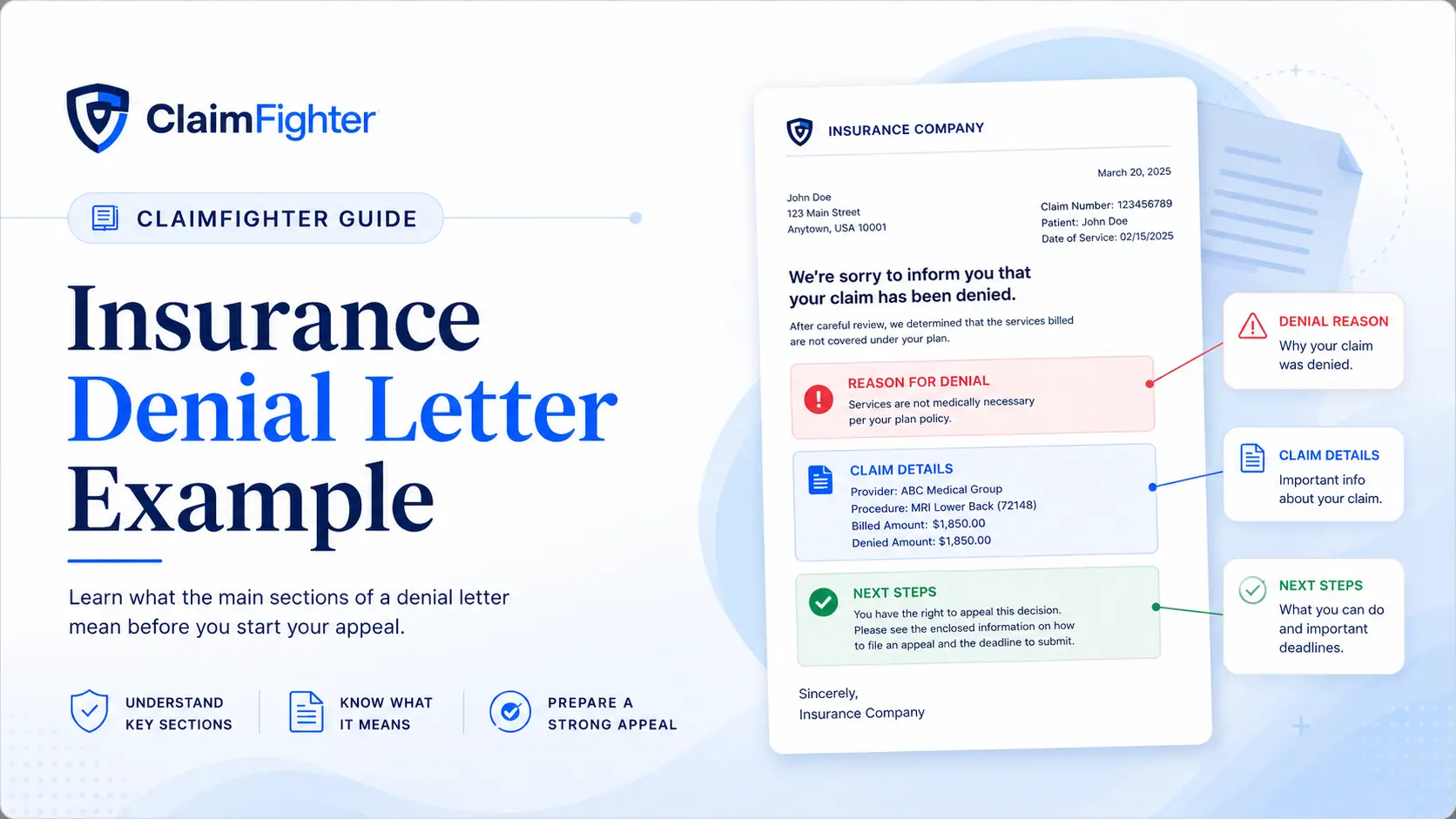
Insurance Denial Letter Example and What It Means
An insurance denial letter is usually a formal notice explaining that the insurer will not pay, approve, or cover a claim or service as requested. The letter may look intimidating, but most denial letters follow a pattern. Once you know what to look for, it becomes easier to prepare an appeal.
Short answer
An insurance denial letter usually includes the denied service, denial reason, plan rule, claim details, appeal deadline, and instructions for submitting an appeal.
The denied service or claim
The letter should identify what was denied. This might be a medication, MRI, dental procedure, surgery, therapy visit, hospital stay, prior authorization request, or general medical claim. The description may appear near a claim number, service date, or explanation of benefits.
Write down the wording exactly as shown. If the letter lists a CPT or CDT code, copy it carefully. Those codes can help identify what the insurer reviewed, but they should not be guessed or added unless they are visible or confirmed.
The reason for denial
The denial reason is the most important part of the letter. It may say the service was not medically necessary, not covered, out of network, missing information, over a benefit limit, coded incorrectly, or missing prior authorization. The appeal should respond to that reason.
Sometimes the reason is buried in formal language. Look for phrases like 'not medically necessary,' 'not a covered benefit,' 'documentation not received,' or 'authorization was not obtained.' ClaimFighter is designed to help translate that kind of wording into plain English.
Appeal rights and deadlines
Many denial letters include appeal rights, the number of days you have to appeal, and where the appeal should be sent. The letter may list a mailing address, fax number, member portal, phone number, or department name. Save this information before you start writing.
If the letter does not clearly show the deadline, check your plan documents or contact the insurer. Missing the appeal deadline can make the process harder, so treat the deadline as one of the first details to confirm.
Plan language or clinical criteria
Some letters cite plan rules, medical policy guidelines, clinical criteria, or benefit language. These references can help you understand the insurer's basis for denial. They can also help you decide what documents to include with the appeal.
For example, if the insurer says documentation does not show medical necessity, the appeal should point to provider notes, treatment history, symptoms, diagnosis information, or records showing why the service was requested.
What to do after reading it
After you identify the denied service, denial reason, deadline, and submission instructions, gather documents that match the issue. Then write a letter asking the insurer to reconsider and review the attached documents.
You do not need to make legal claims or promise an outcome. A clear appeal draft should organize the facts, explain the request, and avoid inventing details. ClaimFighter can help generate that draft from the denial letter and confirmed information.
Need help turning your denial letter into an appeal draft?
Upload Your Denial LetterFAQs
What should I check first after reading an insurance denial letter?
Start with the denial reason, appeal deadline, member ID, claim number, insurer instructions, and any code or service description that appears in the letter.
Do I need to include medical records with every appeal?
Not every appeal needs the same records, but provider notes, treatment plans, bills, plan language, and the denial letter can help show why the claim should be reviewed again.
Can ClaimFighter guarantee my appeal will be approved?
No. ClaimFighter helps create an appeal draft for informational purposes only and does not guarantee claim approval.
What documents may support this type of appeal?
Documents may include the denial letter itself, explanation of benefits, provider notes, plan documents, bills, and records related to the denied care.
ClaimFighter helps generate appeal letter drafts for informational purposes only. It is not legal, medical, or insurance advice and does not guarantee claim approval.