ClaimFighter Guide
Appeal Letter Guide
Appeal Letters
How To Write an Insurance Appeal Letter
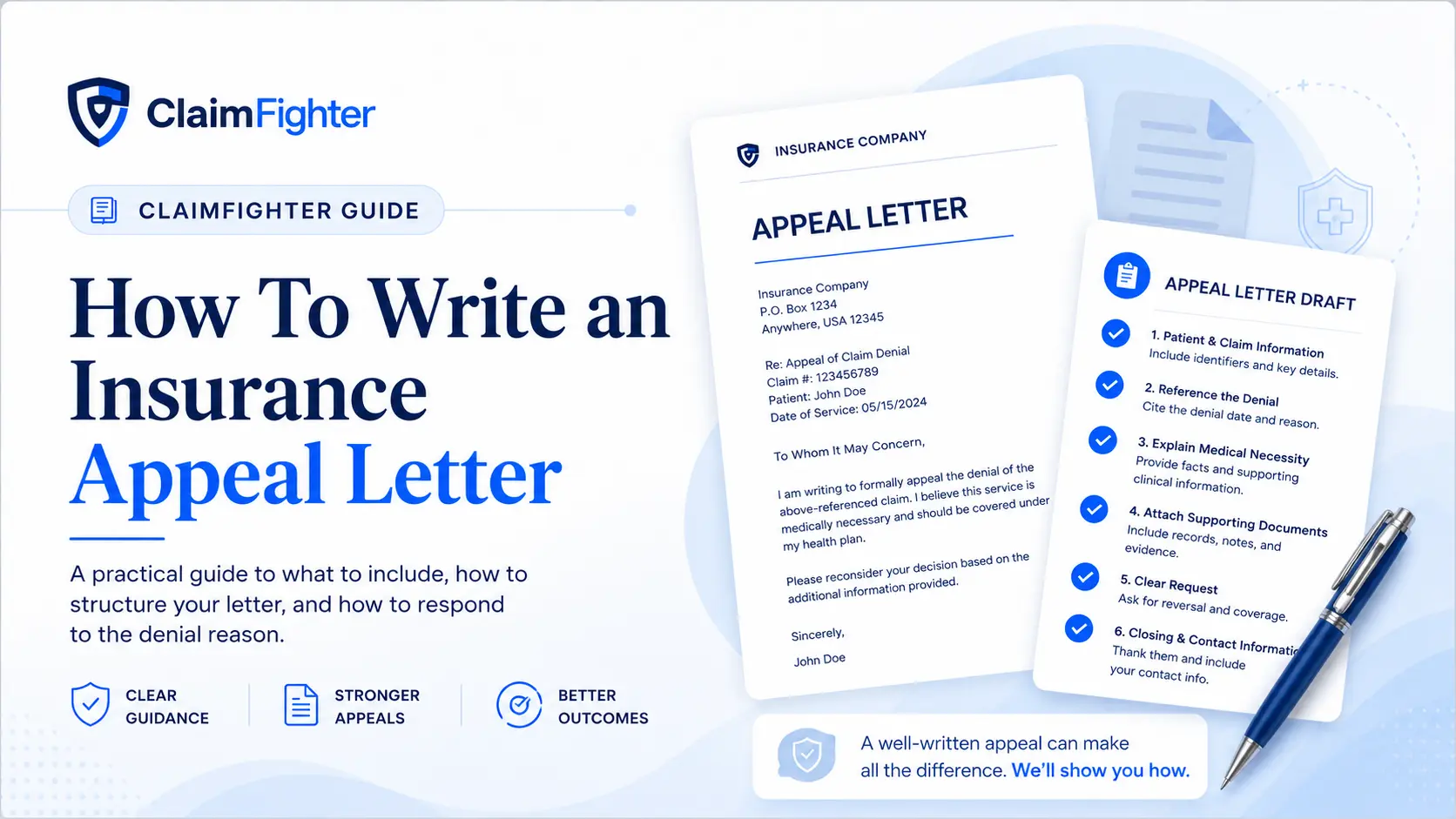
Writing an insurance appeal letter is easier when you treat it like a structured response, not a blank-page writing project. The letter should identify the claim, explain what was denied, respond to the denial reason, and tell the insurer what documents you want reviewed.
Short answer
To write an insurance appeal letter, include your claim details, the denied service, the insurer's denial reason, a clear request for reconsideration, and supporting documents that relate to the denial.
Start with the basic claim details
The top of the appeal letter should make it easy for the insurer to match your appeal to the right file. Include the patient name, insurance company, member ID, claim number, denial date, provider name, and the service or treatment that was denied when those details are available.
If you see a CPT, CDT, denial, or authorization code in the letter, include it exactly as shown. Do not invent a code if you cannot find one. If a code is not visible, focus on the service description and the denial reason.
Name the decision you are appealing
Use clear language such as, 'I am writing to appeal the denial of coverage for...' Then identify the denied service. This helps the reviewer understand the purpose of the letter before they reach the supporting details.
Avoid emotional accusations or broad complaints about the insurer. It is understandable to feel frustrated, but the strongest appeal letter usually stays focused on the claim, the reason given, and the documents that support reconsideration.
Respond to the denial reason
The body of the letter should answer the reason the insurer gave. If the denial says the service was not medically necessary, explain that the provider recommended the care and point to treatment notes, diagnosis information, or records. If the denial says information was missing, list the documents included with the appeal.
For prior authorization denials, mention that the requested service was submitted for review and that the provider determined it was needed. For medication denials, include the prescriber recommendation and medication history when available. The goal is to make the response specific, not long for its own sake.
List the supporting documents
A document list helps the reviewer see what is included. You can use a simple list such as denial letter, provider note, treatment plan, medical records, prescription history, imaging order, or plan documents. For dental appeals, this may include x-rays, periodontal charting, CDT code information, or dentist notes.
Keep the list honest. If a document is not included, do not imply that it is. If you plan to send a provider note later, say that additional documentation may be provided if requested.
Close with a clear request
End by asking the insurer to reconsider the denial and provide a written response. If the denial letter lists a review timeframe, you can reference that timeframe. You may also ask the insurer to identify any specific plan rules, clinical criteria, or missing documents used in the decision.
Before sending, review the letter for accuracy. Make sure names, IDs, dates, codes, and claim numbers match the denial letter. ClaimFighter can generate a first draft, but you are still responsible for checking the details before using it.
Need help turning your denial letter into an appeal draft?
Upload Your Denial LetterFAQs
What should I check first after writing an insurance appeal letter?
Start with the denial reason, appeal deadline, member ID, claim number, insurer instructions, and any code or service description that appears in the letter.
Do I need to include medical records with every appeal?
Not every appeal needs the same records, but provider notes, treatment plans, bills, plan language, and the denial letter can help show why the claim should be reviewed again.
Can ClaimFighter guarantee my appeal will be approved?
No. ClaimFighter helps create an appeal draft for informational purposes only and does not guarantee claim approval.
What documents may support this type of appeal?
Useful documents may include the denial letter, provider notes, treatment plans, medical records, bills, prescription history, imaging orders, dental x-rays, or plan language.
ClaimFighter helps generate appeal letter drafts for informational purposes only. It is not legal, medical, or insurance advice and does not guarantee claim approval.